Marine Biology
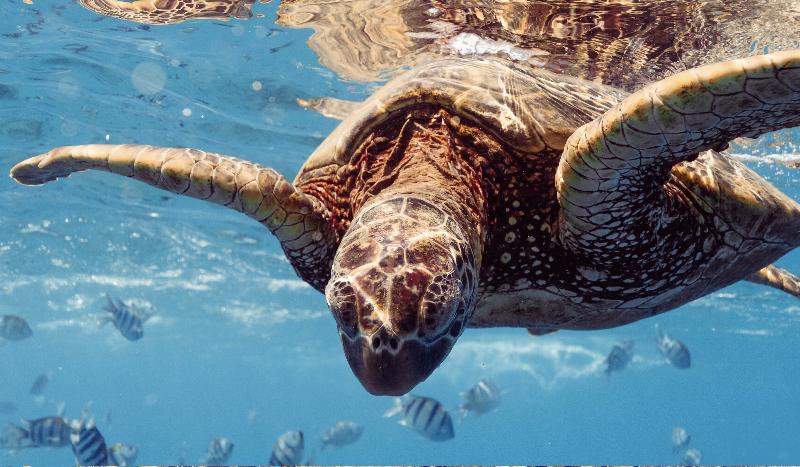
The study of life in the ocean, from tiny plankton to whales, and the habitats they share. As the ocean changes faster than ever, marine biologists also study how it supports food webs, the carbon cycle and the climate itself.
What would you do?
- Gather data by tagging animals and collecting samples
- Research how habitats and animals interact through experiments
- Model how ecosystems respond to climate change or pollution
- Create underwater technology to monitor wildlife and ocean changes
- Write impact reports to help policymakers and conservationists protect oceans
To fight climate change, marine biologists…
Store carbon
- Grow mangroves and seagrass that store carbon
- Measure how much carbon the ocean absorbs in different places
- Protect vulnerable habitats so they don’t release carbon
- Encourage phytoplankton growth
Conserve life
- Protect habitats threatened by warming and acidification
- Track animal populations over time to see how climate change affects oceans
- Develop ways to shield habitats and animals from climate effects
Discover new technologies
- Develop carbon-capture solutions like seaweed that doubles as biofuel
- Create low-emission aquafarming
- Deploy better drones and sensors to track ocean and animal health
- Invent ways to restore coral reefs and kelp forests
Guide action
- Advise governments and organizations on ocean and climate policy
- Identify the most vulnerable habitats that need urgent action
- Teach the public everyday habits that protect oceans
Relationship to climate change
Marine biology is essential to protecting and understanding the ocean, which regulates the climate and stores carbon.
Use marine biology for these Project Drawdown solutions:
- Aquaculture
- Artificial Upwelling
- Abandoned Farmland
- Advanced Biofuels
- Agroforestry
- Bio Blocks
- More solutions →
 Featured expert
Heather Austin
Marine biologist.
View her profile →
Get started
A great fit if you’re interested in nature, complex systems, innovative technology and protecting wildlife.
Recommended classes
High school: Biology (H), AP Biology, Physics (H), AP Physics, Chemistry (H), AP Chemistry, Geometry (H), Precalc/Trigonometry (H), AP Statistics, AP Environmental Science, Marine Science, AP Seminar (helpful), AP Research (helpful)
Project ideas
- Measure carbon in soil or mud samples from wetlands
- Compare how aquatic plants tolerate changes in temperature, acidity or salinity
- Use open-source databases to see how ocean species react to climate change
- Join citizen science groups and contribute local data to global studies
- Build a small aquarium to test how well algae absorbs CO₂
- Build a DIY underwater sensor to monitor a local body of water
More resources
- Climate Change Impacts on the Ocean and Marine Resources
- Why is the ocean so important for climate change?
- Hidden biological processes can affect how the ocean stores carbon
- The Ocean as a Solution to Climate Change
- How Scientists Are Using Drones to Study Sperm Whales
Written by Aiden Miao, Palo Alto High School (2027)