

Climate Progress Center
Terraced fields from above
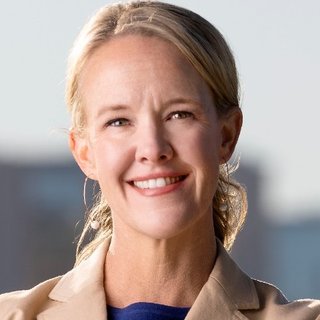
Kristen Averyt

Expert insight · Environmental Science

Kristen Averyt

Executive Vice President of Science, American Geophysical Union

Kristen Averyt is the Executive Vice President of Science at the American Geophysical Union, the largest association of Earth and space scientists in the world. She has also applied environmental science as a former Drought Director for the Biden Administration and as a member of the Nobel Prize-winning IPCC group. Outside of environmental science, she loves the ocean and has always dreamed of being an astronaut.

Check out theEnvironmental Science page →

Top insights from our conversation

The top insights we took away from an exclusive conversation with Prof. Averyt.

01

Majoring in environmental science + something more specialized is important

Kristen Averyt loved the ocean as a child. In college, she learned about climate change in a chemical oceanography class that taught the iron hypothesis: dumping iron into the ocean to boost plankton growth and pull carbon dioxide out of the atmosphere. After reading Al Gore’s Earth in the Balance for an environmental geology course, she realized how large a problem climate change really was. After her PhD she did paleoclimate research, looking at how CO₂ shaped millions of years of past climate. Her passion was to use “science to help society.”

From her story, we learned that environmental science is an important major, but it’s even more impactful when you pair it with something more specific. You get a general understanding of the science behind climate change, plus the technical skills to make a sharp impact in one field.

“That… diversity of training in environmental sciences, while still having that specialty in chemistry really sets you up to think about big picture things and to really tackle things from a process perspective and from an interdisciplinary perspective.”

“That’s something that can really help you with career opportunities more broadly as well,” Prof. Averyt said.

02

Climate change is an incredibly interdisciplinary problem

“Solutions moving forward are going to be interdisciplinary… It is not just… a physics person talking to a chemist. It is… the social scientists… the economists… the communicators.”

One of the biggest benefits of majoring in environmental science is that it teaches climate change from a big-picture view. With that comprehensive understanding, environmental scientists can direct others to where they can make the most impact.

As Prof. Averyt said, “It is going to take everybody to help us.”

03

Always be nice to people, especially in the climate space

Prof. Averyt told us a story about ending up working for a student she taught years ago. In the climate world, where people are on the same team, there’s a big emphasis on lifting up people younger than you, especially since youth are the ones inheriting the problem of climate change. “You want to see other people succeed,” she said.

As a student, use this to your advantage! And, “Be nice to everybody, because you never know who might be in some position in the future.”

04

It’s more important now than ever to make an impact

When we asked what a big challenge of working on climate change was, Prof. Averyt replied: “Right now.”

The Trump administration has been dismantling critical climate science. It dismissed all of the authors contributing to the national U.S. climate assessment, including her. It’s “bad all around for science.”

But Prof. Averyt and the AGU team haven’t given up. AGU has been serving as a platform where “the dialogue and the science that was evolving can continue,” and is supporting the IPCC’s work on its next big report on global climate change.

Bonus advice

Environmental science varies a lot by name. “It’s sustainability at one school, it’s… environmental sciences, earth sciences at another.” Look at which major each university uses to teach about climate change and how humans affect the Earth!

Written by Aiden Miao and Agastya Parikh

“Be nice to everybody, because you never know who might be in some position in the future.”

More expert insights

Jennifer DionneJennifer Dionneon Materials ScienceRead the insights → Daniel CusworthDaniel Cusworthon Data ScienceRead the insights →
Meet all of our experts →