

Climate Progress Center
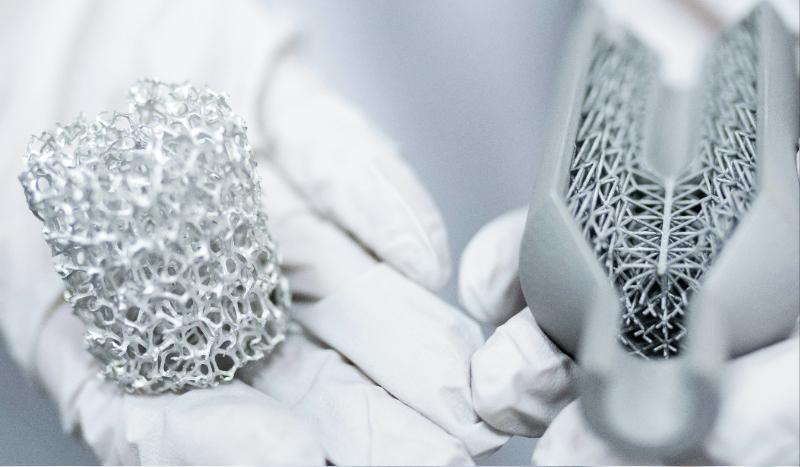
3D-printed lattice materials in gloved hands
Jennifer Dionne

Expert insight · Materials Science

Jennifer Dionne

Professor of Materials Science, Stanford University

Jennifer Dionne is an award-winning Professor of Materials Science at Stanford University. She has pioneered nanophotonics and is designing light-driven nanoparticle catalysts for environmental chemical manufacturing. She also uses materials science to study proteins and for quantum communication. Outside of materials science, she enjoys long-distance running and exploring new cultures.

Check out theMaterials Science page →

Top insights from our conversation

The top insights we took away from an exclusive conversation with Prof. Dionne.

01

Majoring in materials science means flexibility in a field of your choice

Professor Dionne discovered her love for physics in the physics section of a bookstore. She double majored in systems science and mathematics, then earned her PhD in applied physics at Caltech, where she learned what materials science was. She is now a Professor of Materials Science at Stanford.

“I think it’s such a great fit because it’s such a foundational technology for… energy, information, [and] health care.”

Prof. Dionne wasn’t confined to one field of science. She works on cancer immunotherapy, proteins, quantum information science and chemical manufacturing, which is where she makes her biggest impact on climate change (more on that below!).

Materials science can be applied to many fields at once. It lets you “think deeply about the science but then work broadly across applications.” Compared with majors that keep you more or less in one area, materials science frees you to explore much of the science the world has to offer.

02

Materials science gives you the power to shape the world

Prof. Dionne’s lab has recently been working on ammonia, which is used in fertilizer that feeds about half the world. Making ammonia normally takes very high pressure and temperature, which means a lot of energy and greenhouse gases. Her lab discovered a nanoparticle catalyst that uses sunlight to turn nitrogen and hydrogen into ammonia at room temperature and pressure. The hope is to make chemical manufacturing much more sustainable.

“One of the biggest benefits [of materials science] is that it’s a field that can have a huge impact on the world,” said Prof. Dionne. “I think materials science is probably one of the most application driven and translatable fields of science broadly defined.” That’s why it has huge impacts on medicine, clean energy, aerospace, computing and more.

“As a materials scientist, you have an incredible opportunity to shape the future of the world.”
03

It’s a surprisingly broad major, so getting a PhD is a good idea

Materials science’s breadth is a benefit, but it can also be a challenge. “I think probably one of the risks of the field, especially for younger people, is that it may almost be too broad and you don’t get the chance to go deep enough.”

Prof. Dionne noted that a PhD would likely be very helpful, especially if you want to “deeply understand the science and be able to create the next generation invention.” Because of this, materials science “has a bigger potential energy barrier to make a big impact than something like coding… or AI.”

Bonus advice

For high school students: “As much as maybe it’s challenging to get a summer internship as a high school student, it’s not impossible. So I would say don’t be shy reaching out to potential lab members or professors.”

And: “If you’re extra interested and they don’t respond, don’t be shy to follow up multiple times… As my mom used to say, the squeaky wheel gets the grease.” One follow-up email can make all the difference.

Written by Aiden Miao and Agastya Parikh

“As a materials scientist, you have an incredible opportunity to shape the future of the world.”

More expert insights

Kristen AverytKristen Averyton Environmental ScienceRead the insights → Daniel CusworthDaniel Cusworthon Data ScienceRead the insights →
Meet all of our experts →